Bioclear Bonding in NYC: Two Cases — a Front Tooth Gap and a Black Triangle

A small gap between the two front teeth (a diastema), and a corner chipped off one of them. Neither is a big deal on its own, but together they were the first thing you noticed when this patient smiled. Dr. David Toksoy closed the space and rebuilt the chipped edge with Bioclear composite bonding here at Studio Dental NY in Gramercy Park.

Here is the before and after, up close.
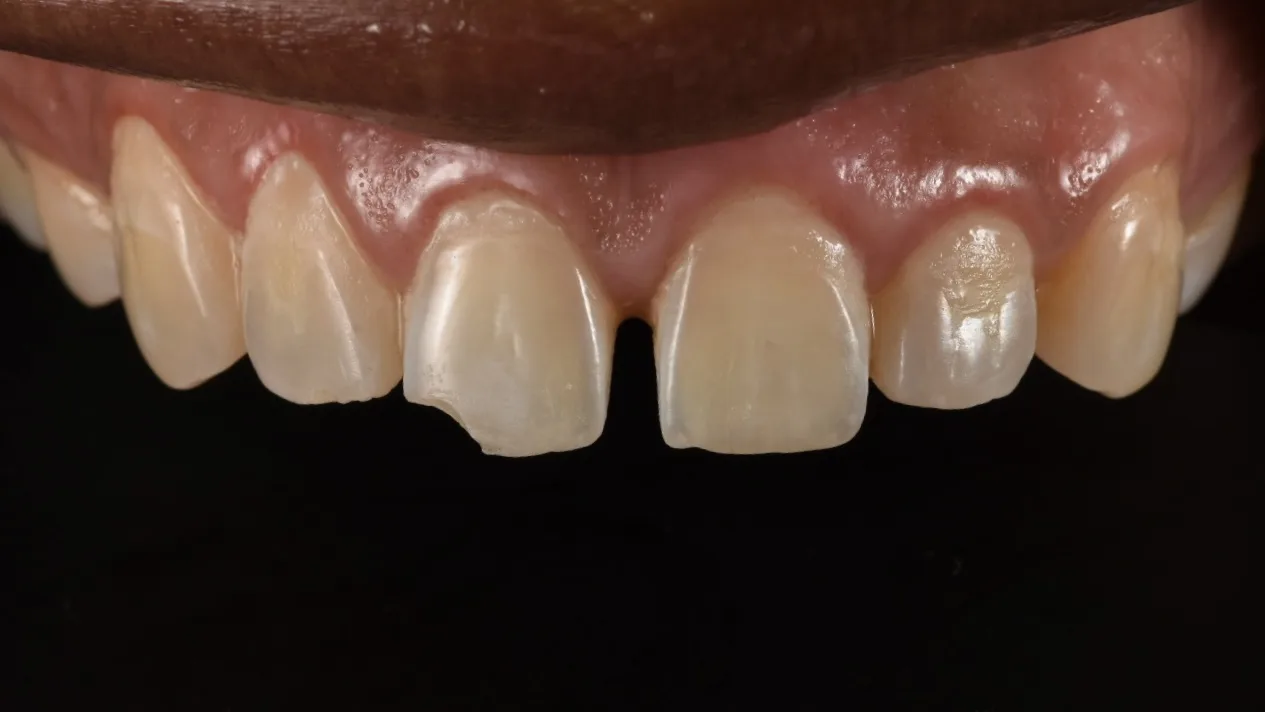
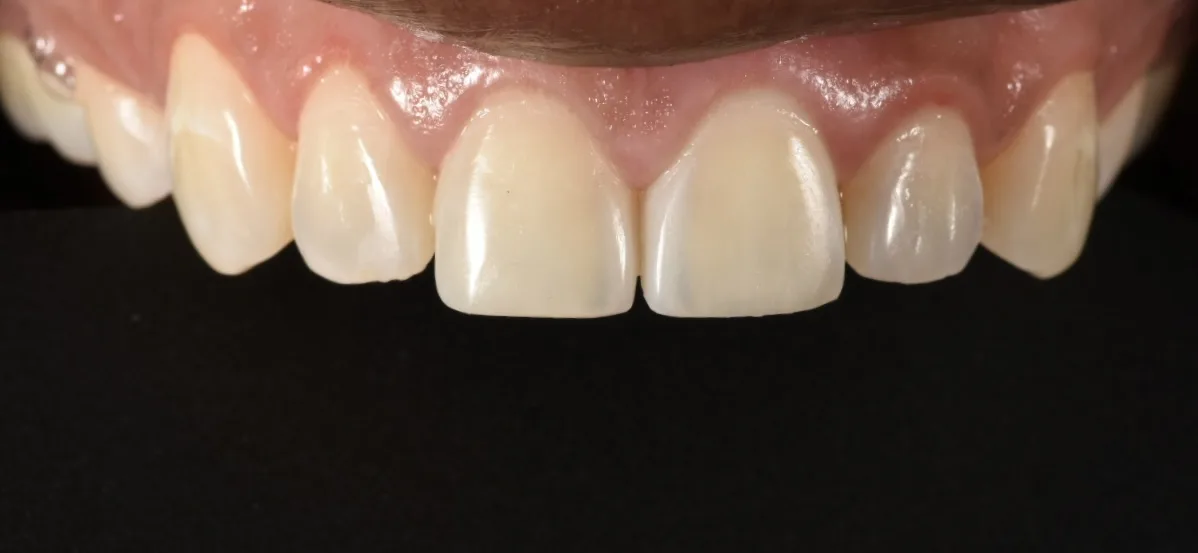
Before Bioclear bonding: gap between upper front teeth and chipped incisal edge, NYC patient
Before treatment
After Bioclear bonding: front tooth gap closed and chipped edge rebuilt, Studio Dental NY
After treatment

What Bioclear bonding actually is

Bioclear is a way of placing composite bonding, the same tooth-colored material used for regular bonding. What sets it apart is a set of clear, pre-curved forms called matrices. They wrap around the tooth while the composite goes in and give the material a shape to follow, including the surfaces where two teeth touch. When you are closing a gap, that contact area is the part that matters most.

If you are reading up on dental bonding in NYC, it helps to know that closing a gap, repairing a chipped edge and changing the proportions of a tooth are three different jobs. Each one is planned on its own, even when they end up on the same teeth. For a gap and a chip like these, bonding does the job without cutting the teeth down for veneers.

A closer look at this case

In the before photo you can see the space between the two upper front teeth and the chipped, uneven edge on one of them. In the after photo the space is closed and the edges sit in a more even line.

The best way to judge the change is to look at the outlines, not the overall impression from across the room. Look at where the two teeth meet, and at the shape of the edge that was rebuilt.
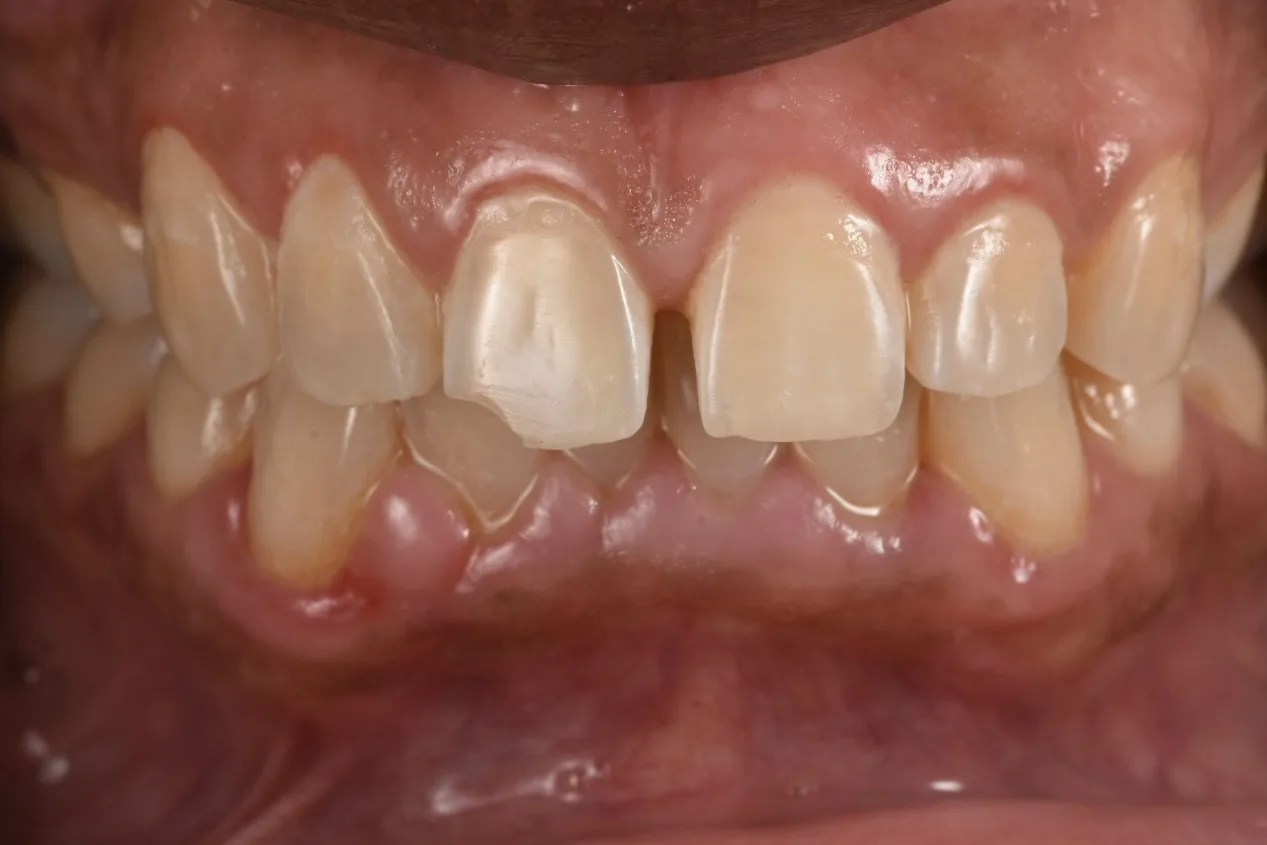
Before Bioclear bonding, full smile view: gap between upper front teeth and chipped incisal edge, NYC patient
Before: the full view
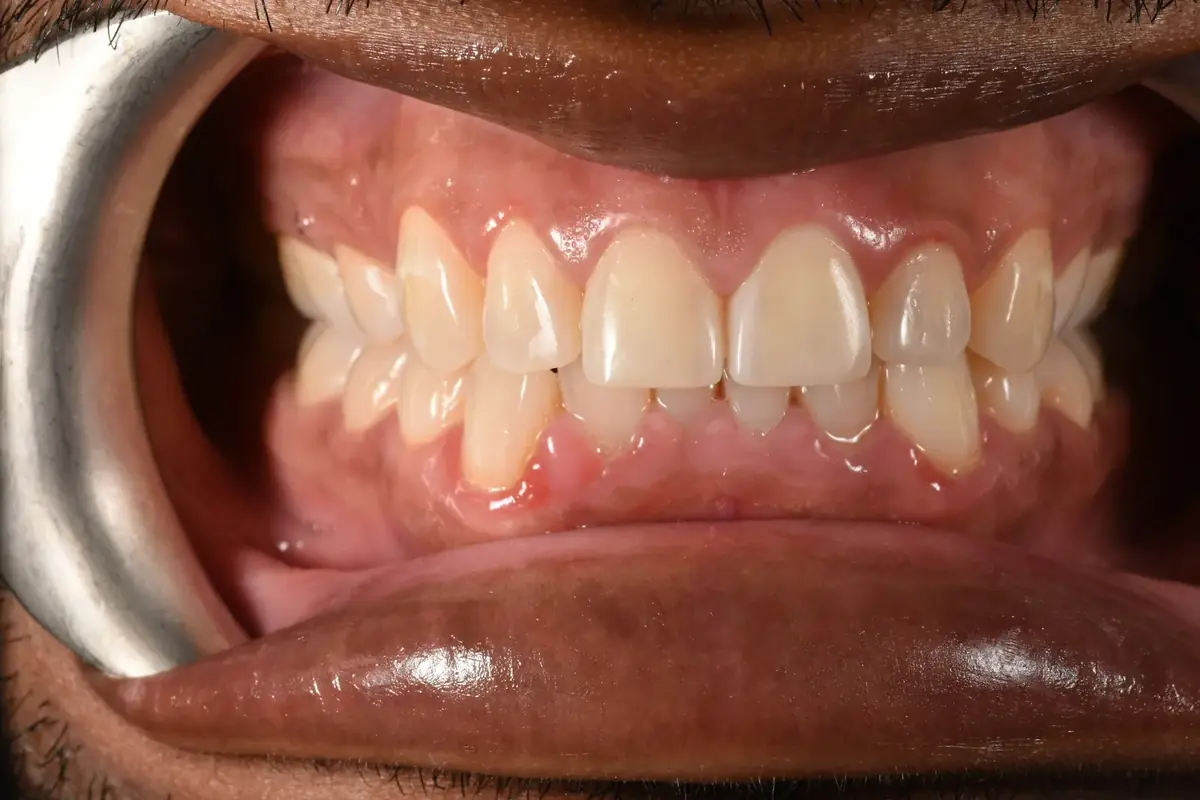
After Bioclear bonding, full smile view: front tooth gap closed and chipped edge rebuilt, Studio Dental NY
After: the full view

One thing worth pointing out: the lighting is not the same in the before and after photos. This comparison is about shape and spacing. It is not a whitening result.

Behind the result

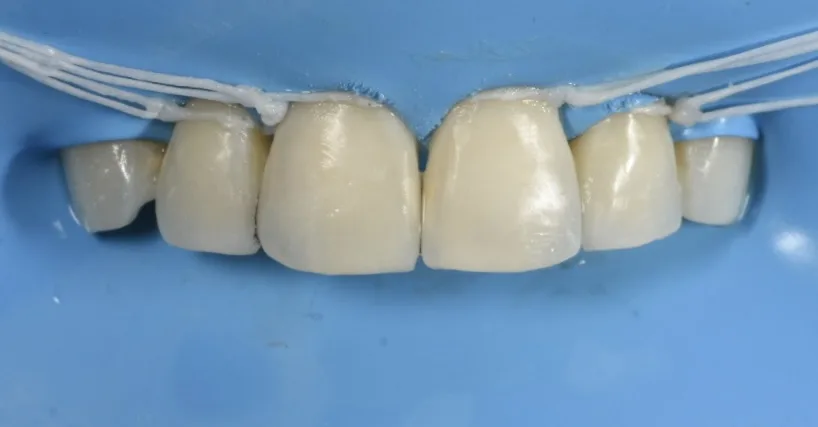
These two photos were taken during treatment. The blue sheet is a rubber dam, which keeps the teeth clean and dry while the bonding is placed. In the first one, a clear matrix is in position on the front tooth. The second shows both front teeth with the bonding in place, before the dam came off.
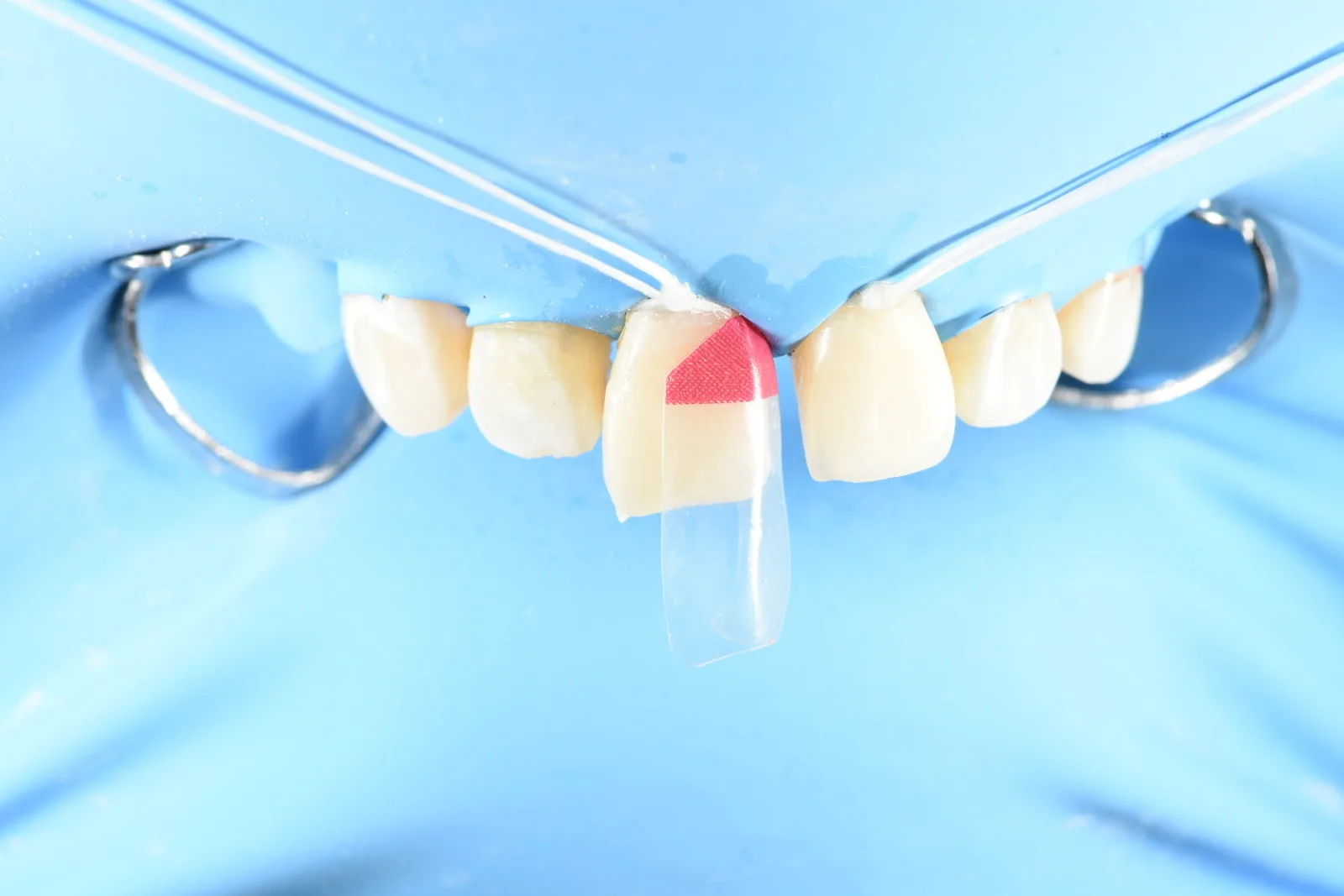
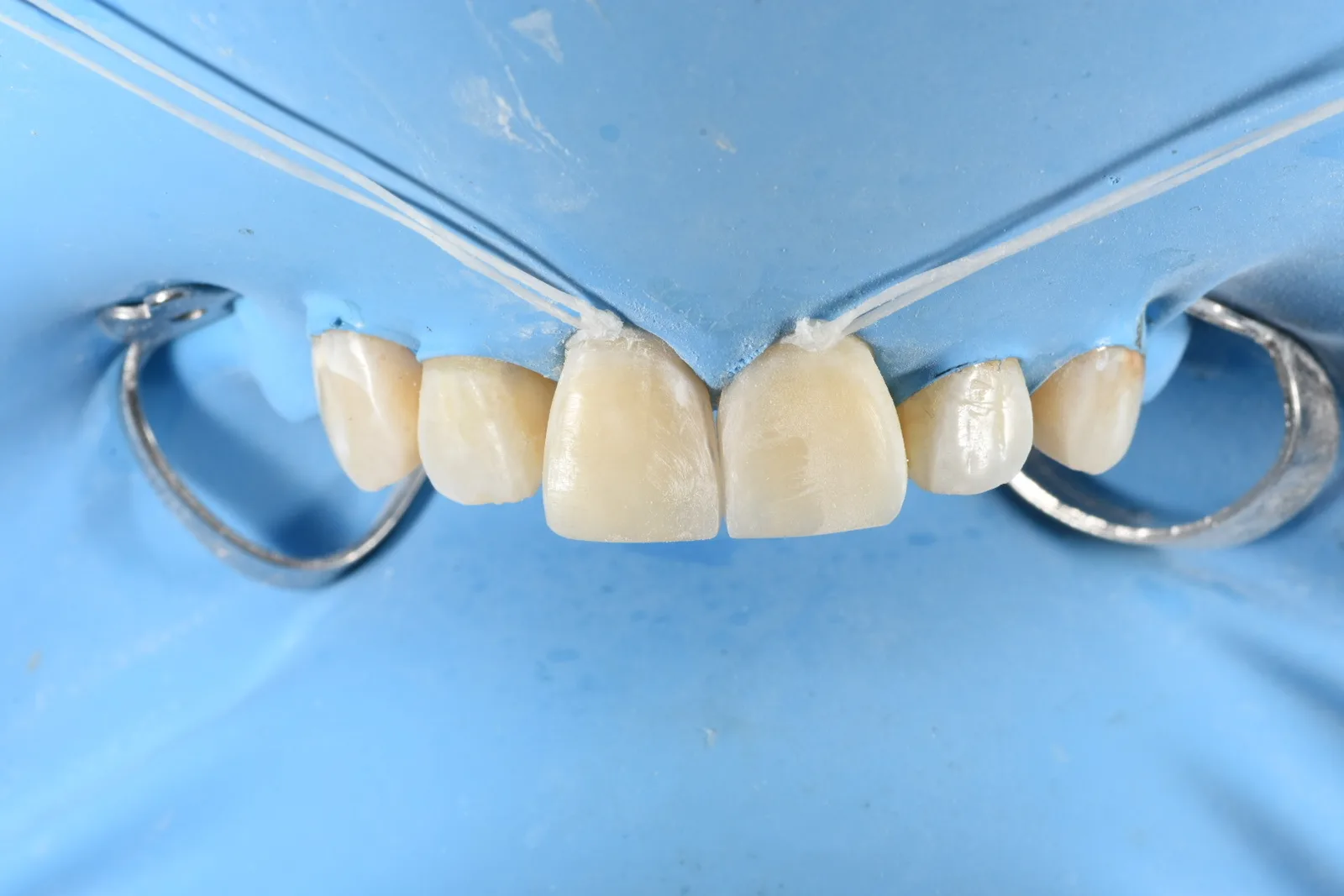
Bioclear clear matrix on front tooth under rubber dam during composite bonding
During treatment: rubber dam and clear matrix
Composite bonding in place on both front teeth before rubber dam removal
The bonding in place, before the dam was removed

Filling a space is the easy part to describe. What makes it look natural is everything around it: how wide each tooth ends up next to its neighbors, the shape of the contact between them, and how the edges are finished.

Case two: closing a black triangle from gum recession

A black triangle is the dark space at the gumline between two teeth, where the gum has pulled back. It is small, but it shows every time you smile, and it tends to catch food.

Between two healthy teeth, a small point of gum fills the space right under where the teeth touch. When the gum recedes, that point sits lower than it used to. The teeth have not moved, but there is less gum filling the space near the gumline, so the gap behind it looks dark.

This spot is hard to fix with bonding shaped by hand, because the space sits right at the gumline and just under it. Bioclear uses a clear, curved matrix that slips just under the gumline. The composite is placed against it, so the tooth is rebuilt in one smooth piece from the gumline down. That fills the triangle without leaving a ledge for food and plaque to collect on.

One thing to be clear about: bonding closes the space. It does not regrow gum tissue or treat gum disease. If your gums are receding, that gets evaluated first, and if it is still active it is treated before any cosmetic work.

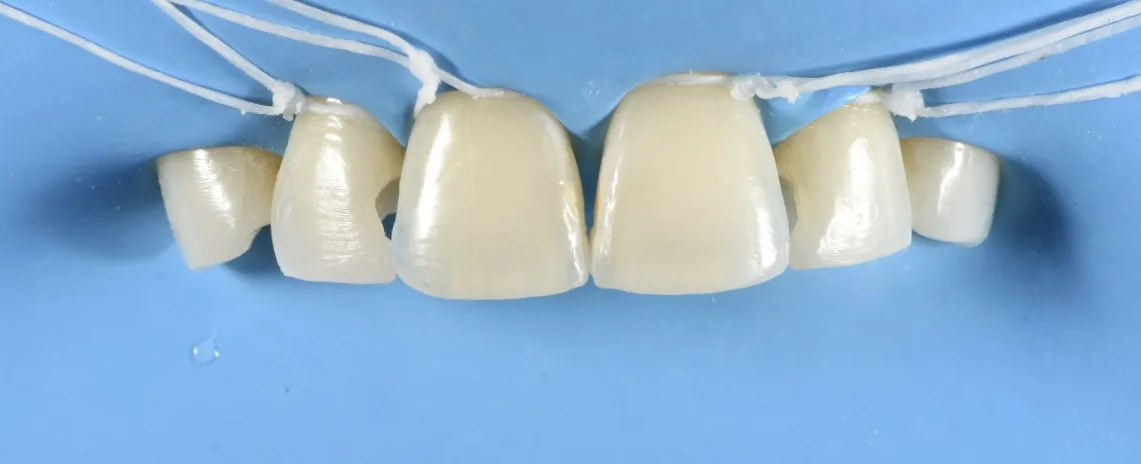
These photos were taken during treatment, under a rubber dam. First the clear matrix goes in, then the composite closes the black triangle, before the dam comes off.
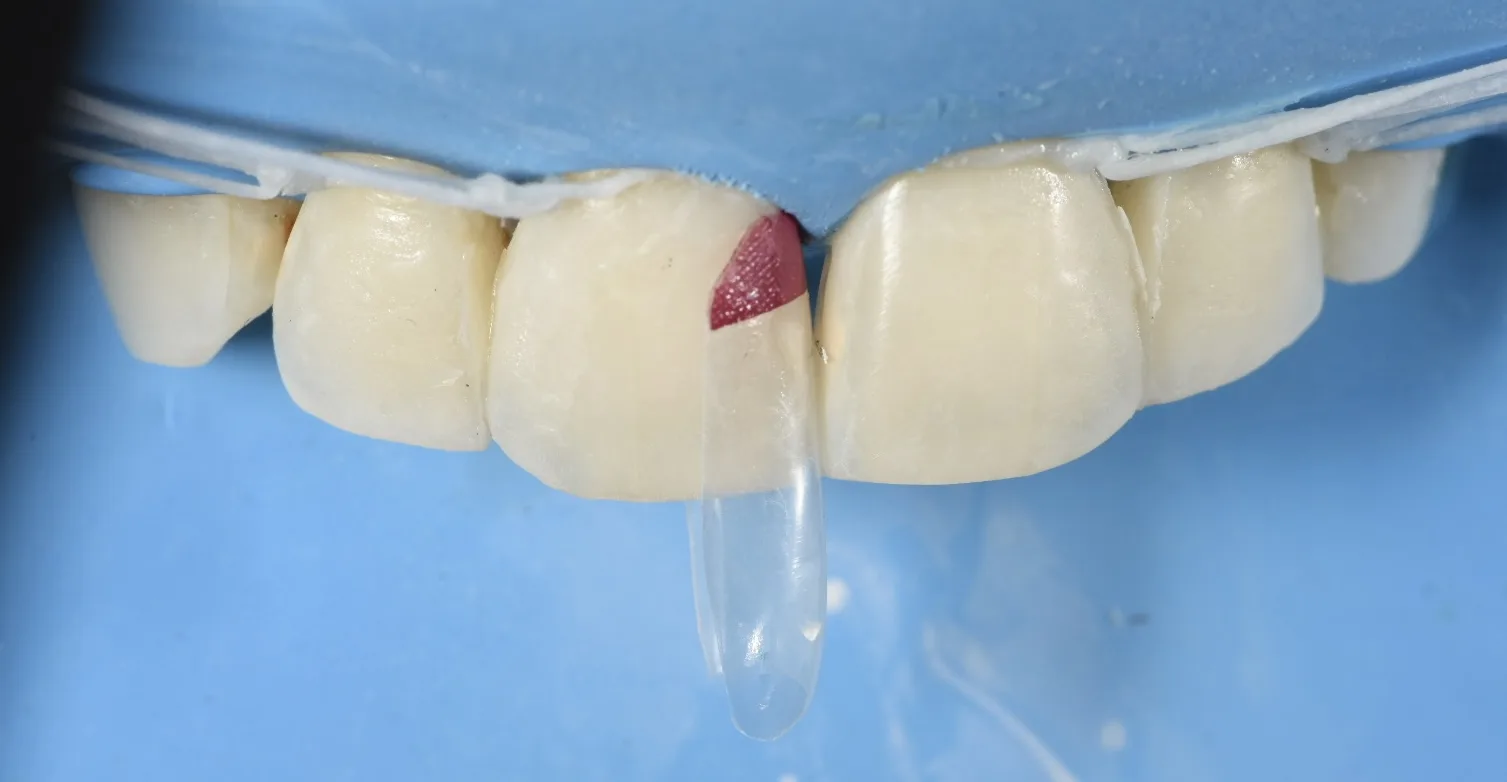
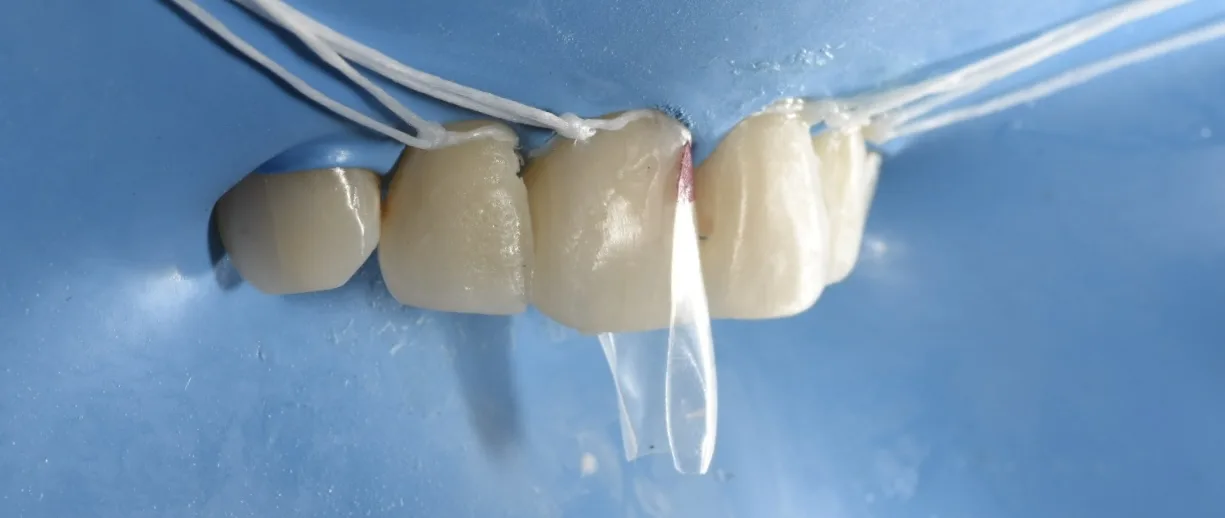
Bioclear clear matrix on upper front tooth under rubber dam to close a black triangle caused by gum recession, NYC
Clear Bioclear matrix in position under rubber dam, before the composite is placed
Wide view of Bioclear matrix placement under rubber dam before composite bonding
Matrix placement from a wider view
Black triangle between front teeth closed with Bioclear composite bonding, gumline contour rebuilt, Studio Dental NY
Black triangle closed with composite, before the dam was removed
Wide view of the upper front teeth after Bioclear bonding closed a black triangle, still under rubber dam
The finished bonding from a wider view

Bioclear questions we hear often

Does Bioclear require drilling the teeth?

Usually not on healthy enamel. The surface is cleaned and prepared so the composite bonds, but the tooth is not cut down the way it is for a crown or many veneers. If there is old filling material or decay in the area, that is removed first.

Can Bioclear fix black triangles caused by gum recession?

Often, yes. The composite is shaped from the gumline down so it fills the dark space. It does not grow the gum back or treat gum disease, so Dr. Toksoy checks your gums first. If recession is still active, that is treated before any bonding, sometimes with a periodontist.

Can black triangles after Invisalign or braces be closed?

In many cases, yes. As crowded teeth straighten, a space can show under the point where they touch. Bonding is best done once the teeth are in their final position, so if you are still in aligners or braces, we plan it for the end of treatment.

Is Bioclear the same as regular bonding?

It uses the same kind of tooth-colored composite. The difference is the clear, curved Bioclear matrix, which lets the composite be shaped in one smooth piece right down to the gumline. That matters most for gaps and black triangles, where bonding shaped by hand can leave a ledge.

How long does Bioclear bonding last?

With good care, bonding can last several years before it needs a polish, a repair or a replacement. Grinding, biting nails or chewing ice shorten that. Regular checkups let us touch up small wear early.

Could Bioclear work for your smile?

If a gap or a chipped front tooth has been bothering you, the place to start is a consultation. Dr. Toksoy will examine your teeth, ask what you would like to change and walk you through the options that make sense for you. A photo alone, this one included, can’t tell you which treatment is right.

Our approach is simple: understand what is bothering you, explain the plan clearly, and pay attention to the small details that make a result look like your own smile.

Request a consultation or call (212) 260-2652 to see Dr. David Toksoy at Studio Dental NY in Gramercy Park and talk about a front-tooth gap, a chipped edge, or any questions you have about composite bonding.

Individual results vary. This case shows one patient’s outcome and does not guarantee a similar result. Whether a treatment is right for you depends on an exam.

Man in navy blazer and blue tie, professional portrait

About the Author

DR. TOKSOY

Dr. Toksoy is a cosmetic dentist specializing in minimally invasive, biomimetic dentistry. Guided by the principle “First, do no harm,” he focuses on preserving natural tooth structure while creating beautiful, natural-looking smiles.

Preserve More. Smile Naturally.

Man in navy blazer and tie, professional headshot
DR. TOKSOY

October 22, 2026